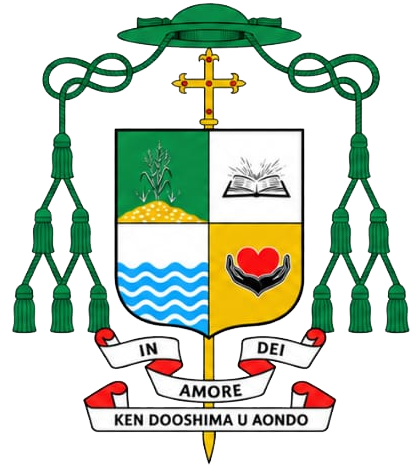
HISTORY OF THE CATHOLIC DIOCESE OF KATSINA-ALA
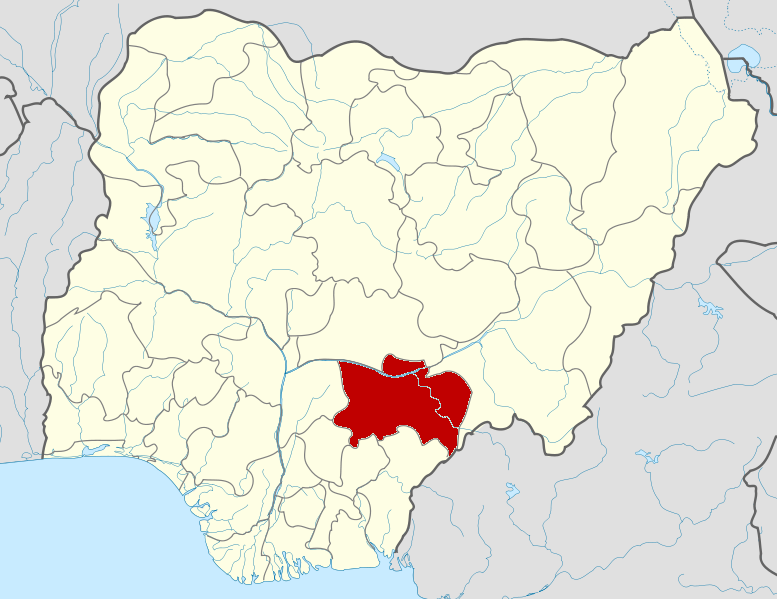


The evangelisation of the ecclesiastical territory of present day Katsina-Ala, Logo, Ukum and some parts of Guma and Buruku (of Benue State) and Awe (of Nasarawa State) was part of the newly formed prefecture that covered the entire land area within the East of the River Niger and to the South of River Benue. In 1920, its status was raised to that of Vicariate Apostolic of Southern Nigeria, though maintaining its boundaries.
The French Holy Ghost Fathers were the first Missionaries who penetrated the Tiv Land, referred to as the ‘Munshi Kingdom' beginning with the Berlin Declaration of 1884, of Benue as an international waterway. In 1900, Pere Leon Lejeune who was appointed Superior of the Spiritan Mission in Nigeria and the Prefect Apostolic of Southern Nigeria, wrote about his delight when he came across excellent weaved cloths produced by the local people called Tiv "who have never seen the turban" i.e. who are not Moslems. He later arrived Abinsi hoping to start a Mission to the Tiv,
While the Tiv Mission kept haunting the Missionaries, negative perceptions of the 'Munshi' people as told by Frederick Lugard, the British High Commissioner to Northern Nigeria and the Moslem authorities kept them away. Because of the Tiv people's rejection of Islam and slave trade, the Whites were seen as collaborators in the slave trade. "They are convinced that the disciples of Mahomet and the Whites are identical" and must both be opposed. "We will have to correct this impression... itisa task thatis the responsibility of Missionaries" Lejeune wrote. In 1930, the German Holy Ghost Fathers and Brothers were sent to reside in the Benue area and develop alll these early contacts. Their apostolic zeal and energy were such that in 1934 the area of the civil territory of Benue Province, Northern Nigeria, was made into the "Prefecture Apostolic of Benue" with its centre first at Makurdi and later at Otukpo.
In 1960 Monsignor James Hagan, the Prefect Apostolic of Otukpo was made a Bishop and the following year he transferred his "Cathedral" seat to Makurdi, thus becoming the first Bishop of Makurdi. In 1966, he resigned due to ill health. January 1968 brought the appointment of then Father J. Donald Murray, CSSp as. the second bishop of Makurdi. The hope of a truly indigenous church became much more realized when the Holy Father John Paul Il, ordained then Father
Athanasius Usuh the first indigenous bishop as the co-adjutor bishop of the diocese on January 6, 1988.
However, the 'Munshi Kingdom was not penetrated directly; areas like Ibi, Ogoja, Abinsi, Dekina, Onitsha were used as spring boards into Tiv land. Evidently, the Mission, to 'Munshi Kingdom! was at the heart of Church in Rome. Mgr LeRoy summarizes the return to Nigeria of Pére Jules Douvry, former Apostolic Administrator for the Cameroon in 1917, with the new Bishop, Joseph Shanahan on Nov. 24, 1920. "Today I had the great joy and honour of being received by His Holiness Benedict XV in private audience. He asked me many questions about the Mission of Southern Nigeria... 1 asked His Holiness the favour of presenting to him Pére Douvry who is going to found a new station amongst a tribe which numbers millions of people. Pére Douvry entered and on his knees asked amongst other things, for a special blessing. The Holy Father blessed both Pére Douvry and the new Mission to the Munshis."
One of the Holy Ghost Missionaries, Pére Joseph Soul, kept a diary of his encounter with the 'Munshi' people and wrote in 1929. "The information that we can gather from the locals on the subject of ‘Munshi' country is very vague. According to the map, the first important centre is Katsina-Ala, situated on the River Katsina-Ala. Some say it is 40 miles away, some say 60. The natives, who move quickly, do the journey in one anda half or two days. As regards the state of the path, itis impossible to know if we could risk the motorcycles on it."
By the time Bishop Shanahan visited Tiv country, others like Pére Eugene Groetz had in 1922 covered, "304 Kilometers passing via Inyanya, Obudu, Mbafura, Jato- Aka, Mot-Ko, Katsina-Ala, Tor-Aba, Ahom, Inyere, Abuur, Yanolu, Korinya and Alifokpa: This last town is in the country of Yachis. The journey took me through different 'Munshi' clans: Kunav, Shangev, Nanev, Turan, Mbagen, Shitire, Turu, Ukan and Gay. At each place, I invited the chiefs; some received me well, other less well."
The territory Katsina-Ala Diocese accounts for what makes Benue State the Food Basket of the Nation. The land is vast, the population is big, the number of Christians keeps growing day by day. The territory extends to Wukari, Takum and Ibi, where the first Missionaries sailed from Dekina.
The history of Shitile, Tombo, Tongov, Kurav-Tiev, Ugondo and Ukum shows that this territory has been under a single block called SANKARA, with same cultural and political affiliations. The missionaries were anxious to bring the Catholic faith in this vast region, because the DRCM, the Dutch Reformed Church Mission DRCM and Islam were spreading rapidly. The access route from Abinsi to Ibi opened up Katsina-Ala faster than other places in the territory, thus making it the administrative headquarters of the District Officer.
The biggest advantage of the spread of the Gospel among the Tiv people has been their single language factor. Unlike other regions where so many languages abound, the 'Munshi' people speak one language, Tiv. The prospects for the growth of the Church are enormous. This area remains avast Mission territory as in the days of Bishop Shanahan, with competing interest from Muslims and other denominations. It is the fastest growing Catholic population in the whole of Benue State. It can be correctly referred to as the "Gold Coast of Makurdi Diocese" in terms of material resources.
On 29th December, 2012 the Holy Father, Pope Benedict XVI having granted the request of Most Rev. Athanasius A. Usuh, the Catholic bishop of Makurdi diocese to create Katsina-Ala and Gboko Dioceses out of Makurdi, Katsina-Ala was created as an ecclesiastical territory with diocesan rights. Msgr. Peter lornzuul Adoboh was also appointed as its first Bishop whose ordination and installation took place on 24th February 2013.
However, like Bishop James Hagan of Makurdi Diocese, ill health obliged Most Rev, Peter I. Adoboh, the first Bishop of Katsina-Ala Diocese not to live for a long time. He died on 14th February, 2020 at St. Vincent Hospital of the Daughters of Charity, Kubwa, Abuja and was buried on 11th March, 2020. At the instance of the See becoming Vacant, Sede Vacante, Most Rev. William Amove Avenya, Bishop of the Catholic Diocese of Gboko was appointed the Apostolic Administrator of Katsina-Ala Diocese on 17" February, 2020 by Pope Francis.
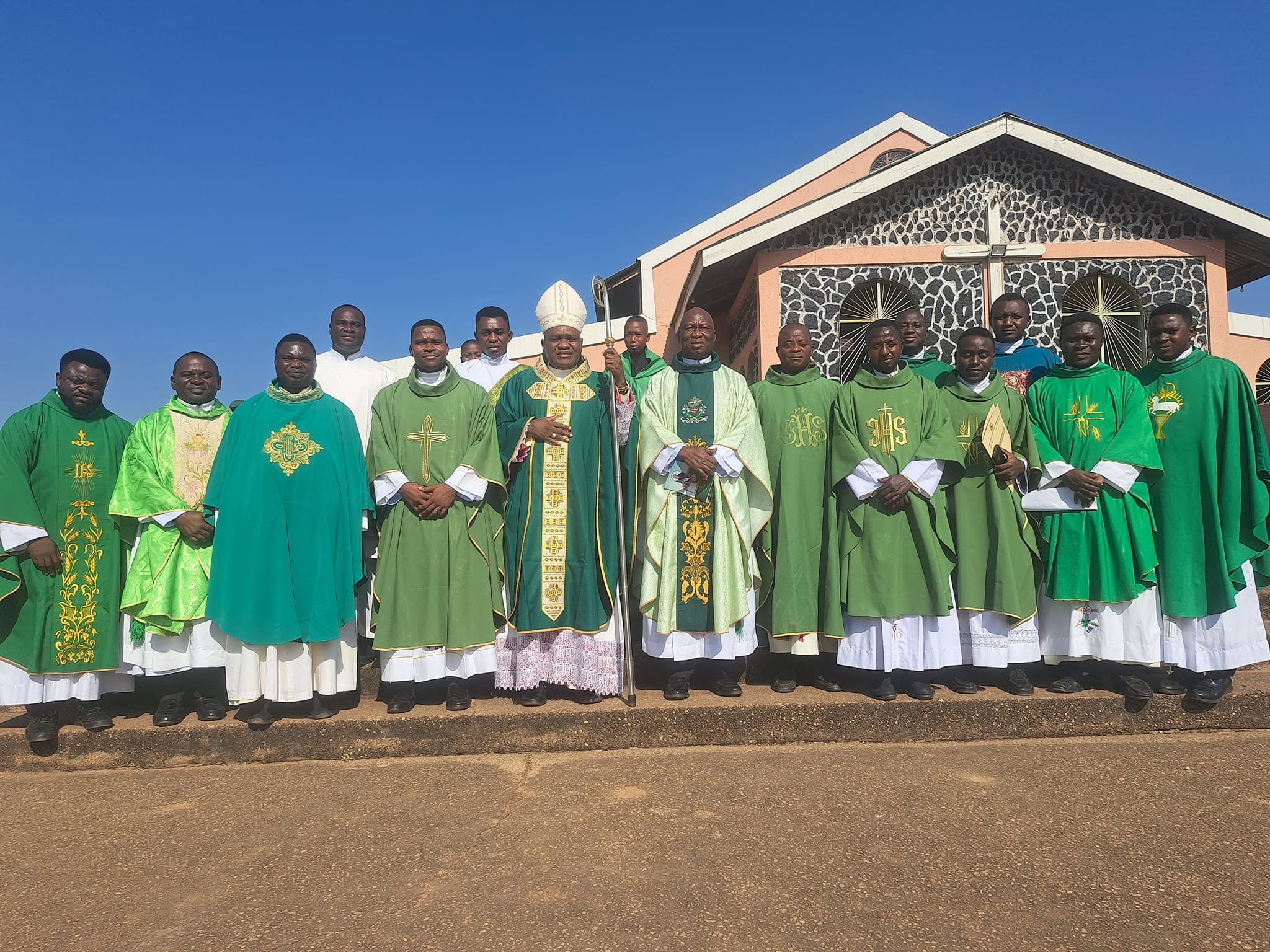
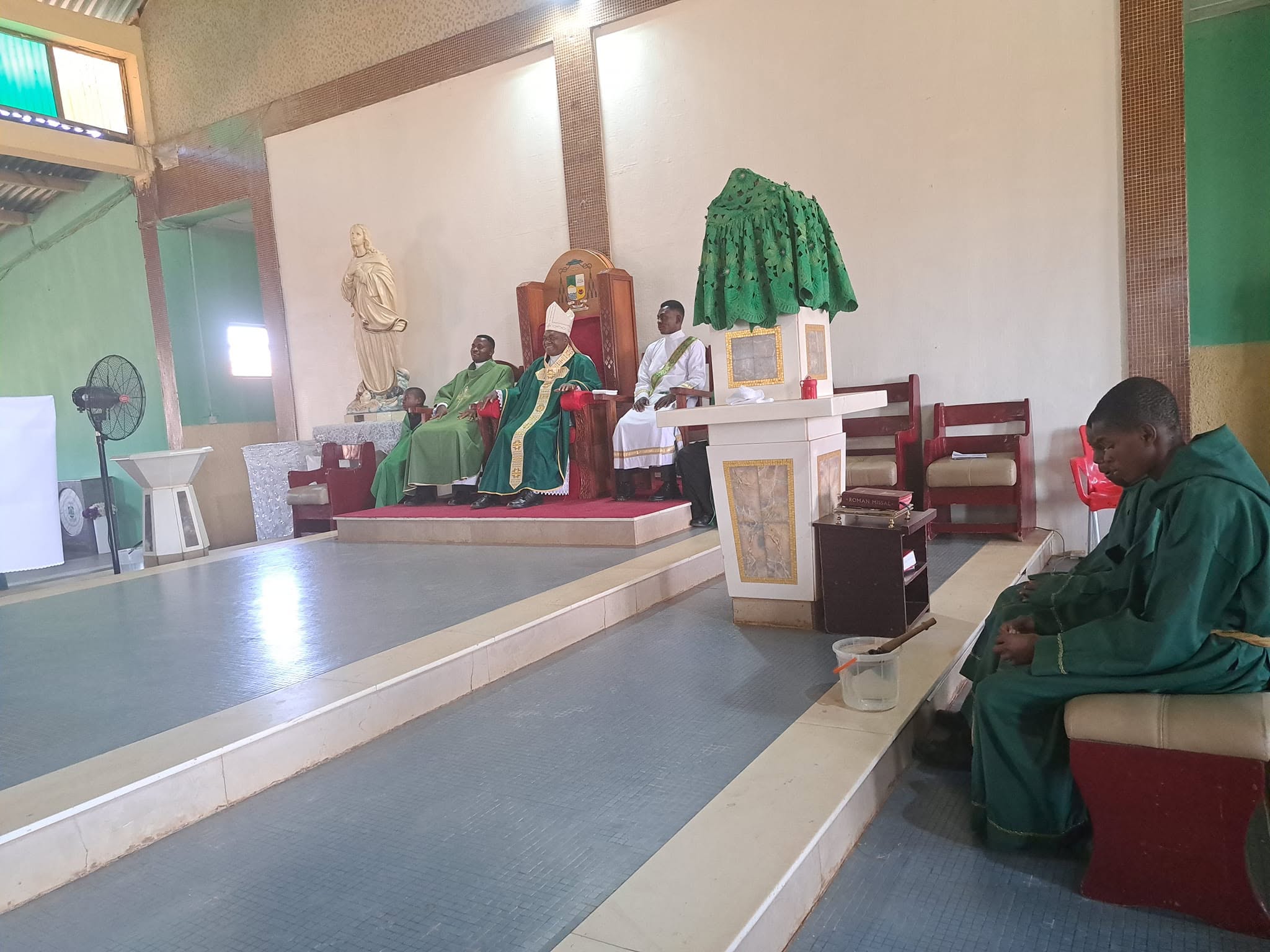
A new era dawned when His Holiness Pope Francis appointed Msgr Isaac Bundepuun Dugu as the second Bishop of Katsina-Ala Diocese. He was appointed on Saturday, 9th April, 2022 and consecrated and installed on Ist July, 2022 at the Chief Akume Atongo Stadium in Katsina-Ala. It is at the behest of Most Rev. Isaac B. Dugu that Katsina-Ala Diocese embarked on its First Diocesan Assembly from 17th 21st October, 2022.